Accessory breast tissue and extra nipples
Accessory breast tissue is breast tissue that develops outside the normal breast, most often in the armpit. Extra nipples, known as polythelia, appear along the same line. Both are harmless developmental variations, but they can be uncomfortable or unsightly, and they can be removed.
What is accessory breast tissue?
Before birth, breast tissue develops along two "milk lines" that run from the armpits to the groin. Normally, only the two breasts on the chest remain. In some people, small islands of breast tissue persist elsewhere along these lines. Accessory breast tissue – also called axillary breast tissue, ectopic breast tissue or polymastia – is most often found in the armpit, sometimes on both sides.
It may go unnoticed for years and become more prominent during puberty, pregnancy or breastfeeding, when hormones make it swell. Some women notice a soft bulge in the armpit that becomes tender before a period or fills with milk after childbirth.
Extra nipples (polythelia)
An extra nipple – polythelia – is a small nipple, sometimes with an areola, along the milk line, most commonly just below the normal breast. It is often mistaken for a mole. An extra nipple with underlying gland tissue is sometimes called polymastia. Both are harmless and affect men and women.
Accessory breast or armpit fat?
Not every bulge near the armpit is breast tissue. Common look-alikes include:
- a fold of fat between the bra strap and the armpit ("bra fat"), which changes with weight;
- the outer edge of the normal breast (the axillary tail), which naturally extends towards the armpit;
- enlarged lymph nodes;
- a lipoma or cyst.
Lymph nodes that are new, hard or growing need medical assessment. Because accessory breast tissue is real breast tissue, it can develop the same conditions as the breast itself – cysts, fibroadenomas and, rarely, cancer. Any new lump in the armpit should be checked; see our pages on breast lumps and breast cancer symptoms.
Diagnosis
The diagnosis is usually made by examination and confirmed with ultrasound, which shows whether the swelling contains glandular tissue, fat or a lymph node. Women of screening age may also have a mammogram, which can include the armpit area. A biopsy is only needed if the imaging shows anything unusual. Knowing exactly what the tissue is helps the surgeon choose between liposuction and excision.
Treatment: liposuction or excision
Accessory breast tissue does not need treatment if it causes no problems. Removal is chosen for discomfort, tenderness, difficulty with clothes and bras, or appearance.
- Liposuction: suitable when the bulge is mostly fat with little gland. A tiny incision in the armpit crease leaves an almost invisible scar.
- Excision: when there is a significant amount of glandular tissue, it is removed through an incision placed in the armpit crease. Excess skin can be removed at the same time.
- Combined: liposuction to contour the area and excision of the firm gland – often the best result.
The removed tissue is sent to the laboratory. An extra nipple is removed with a small elliptical excision under local anaesthetic, leaving a short fine line.
Recovery
Removal is usually done as a day case or with one night in hospital, under general or local anaesthetic depending on the extent. A compression garment or bra is worn for a few weeks. Arm movements are possible from the first day, but strenuous lifting and sport should be avoided for about three to four weeks to protect the wound in the armpit, which moves a lot. Possible risks include seroma (fluid collection), wound tension, scar widening, temporary numbness and, rarely, a small amount of tissue remaining.
Combining with other breast surgery
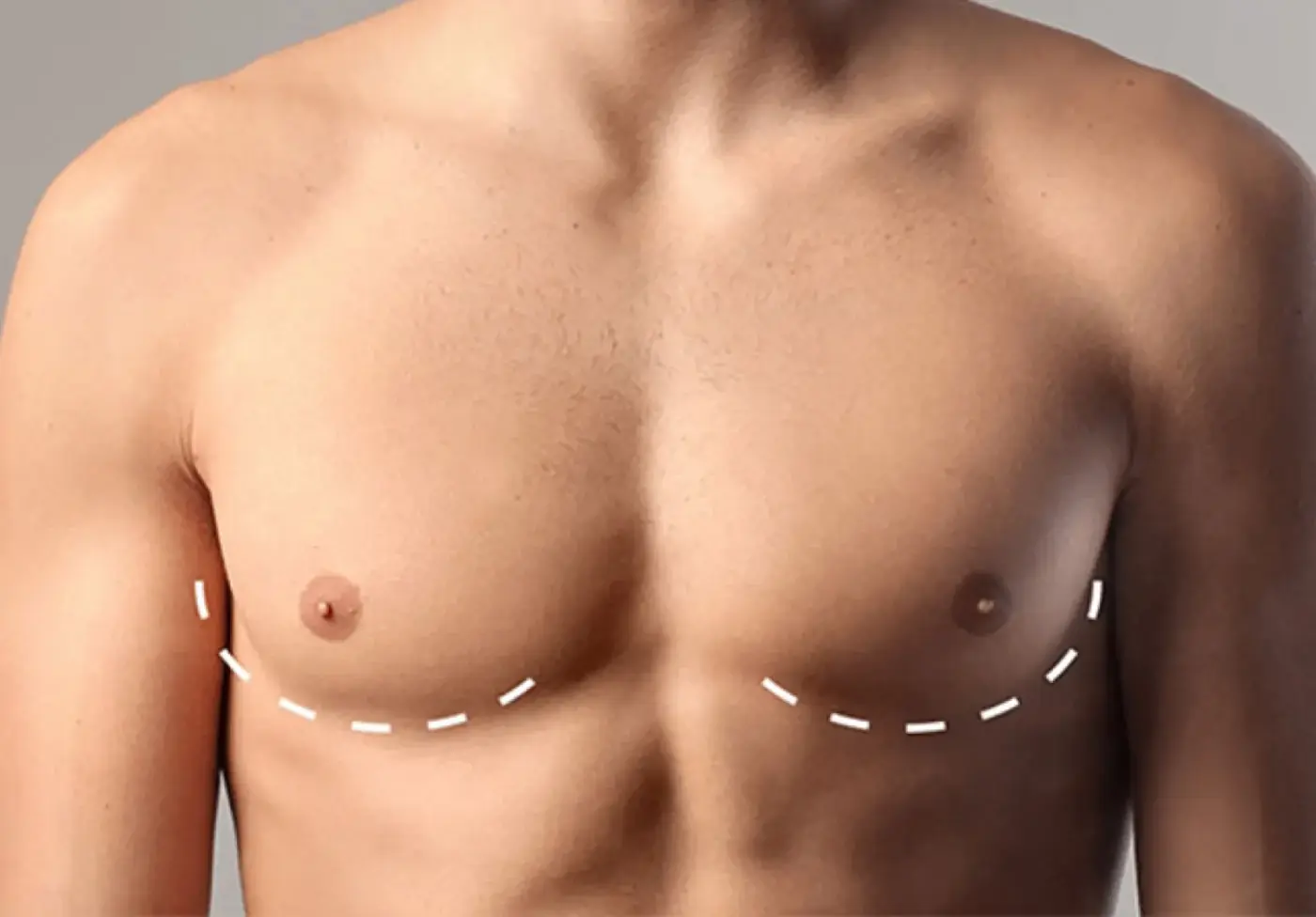
Accessory breast tissue is often treated at the same time as a breast reduction, breast lift or augmentation, which gives a smoother line from the breast to the armpit. In men, axillary fullness may be part of gynecomastia and is corrected in the same operation.
If you are pregnant or breastfeeding, it is best to wait until at least six months after you stop breastfeeding, as the tissue may shrink and the surgeon needs to see its final size.
How New City Clinic can help
Send photos of the area and any ultrasound report for a free online assessment. Our surgeons will tell you whether liposuction, excision or a combination is best, and whether it can be combined with other procedures. Read more on newcityclinic.com about breast surgery and gynecomastia surgery, or ask plastic surgeon Dr. Fatih Kılıç for advice. A WhatsApp coordinator organises your visit to Istanbul.
Frequently asked questions
Is accessory breast tissue dangerous?
No, it is a benign variation. However, it can develop the same conditions as normal breast tissue, so any new lump in it should be checked.
Can accessory breast tissue disappear on its own?
Swelling during pregnancy or breastfeeding often decreases afterwards, but the tissue itself remains.
Will exercise or weight loss remove armpit breast tissue?
Weight loss reduces the fatty part, but glandular tissue does not disappear with diet or exercise.
Is the scar visible after removal?
The incision is placed in the natural armpit crease, so the scar is usually well hidden once healed.
Should an extra nipple be removed?
Only if you want it removed for cosmetic or comfort reasons. Any change in its appearance should be checked by a doctor, like any skin lesion.
Can I breastfeed if accessory breast tissue is removed?
Yes. Removing accessory tissue does not affect the main breasts and breastfeeding from them.
Is accessory breast tissue removal covered by health insurance?
It is often considered cosmetic, but when it causes pain or recurrent problems, some insurers or public systems may fund removal. Check with your insurer or GP.
Can accessory breast tissue cause pain?
Yes. Because it responds to hormones, it can become swollen and tender before periods, during pregnancy and especially in the first days of breastfeeding, when it may fill with milk.
How long does removal take?
Liposuction or excision of armpit tissue usually takes about one to two hours for both sides. Removal of an extra nipple takes around 30 minutes under local anaesthetic.
Will the swelling return after removal?
When the glandular tissue is completely removed, it does not grow back. The fatty part can reappear with significant weight gain.
Do men get accessory breast tissue?
Yes, although it is less noticeable. In men, fullness near the armpit is usually treated together with gynecomastia.
Can I combine accessory breast removal with a breast lift?
Yes. Removing armpit tissue during a lift, reduction or augmentation gives a smoother outline in a single recovery.
New City Clinic · newcityclinic.com
Why patients choose New City Clinic for breast surgery in Turkey
- Authorised by the Ministry of HealthInternational health tourism authorisation, HealthTürkiye registration and TÜRSAB licence 17659.
- Top private hospitals in IstanbulAcıbadem, Medicana, Medipol, Medical Park and Biruni University Hospital.
- A named, experienced breast surgeonOp. Dr. Fatih Kılıç – plastic, oncology and reconstructive surgeon with 12+ years of experience.
- One fixed, all-inclusive priceSurgery, hospital, hotel, transfers and aftercare in one written quote.
- Complication insurance & ISO-certifiedInsurance in every package; ISO 9001, 27001, 10002 and 31000 processes.
Request your free assessment
Share a few photos and your questions on WhatsApp. They are seen only by the medical team.