Breast reconstruction after mastectomy
Breast reconstruction recreates the shape of the breast after a mastectomy or a large lumpectomy. It can use implants, your own tissue (such as a DIEP flap) or a combination, and it can be done at the same time as the cancer operation or later.
What is breast reconstruction?
Breast reconstruction is plastic surgery to rebuild one or both breasts after cancer surgery or a preventive mastectomy. It does not affect the cancer treatment itself and, as far as current evidence shows, does not make it harder to detect a recurrence. It is entirely optional: some women choose reconstruction, others an external prosthesis or a flat chest. The aim is to give you a choice and a result you feel comfortable with.
Immediate or delayed reconstruction?
Immediate reconstruction is done in the same operation as the mastectomy. The skin envelope is often preserved, which gives a more natural result, and you wake up with a breast shape.
Delayed reconstruction is done months or years later, often after chemotherapy and radiotherapy are finished. It is chosen when radiotherapy is likely, when the cancer needs urgent treatment, or when a woman needs time to decide.
Radiotherapy affects skin and tissue and increases the risk of complications with implants, so the plan is always coordinated with your oncologist.
Implant-based reconstruction
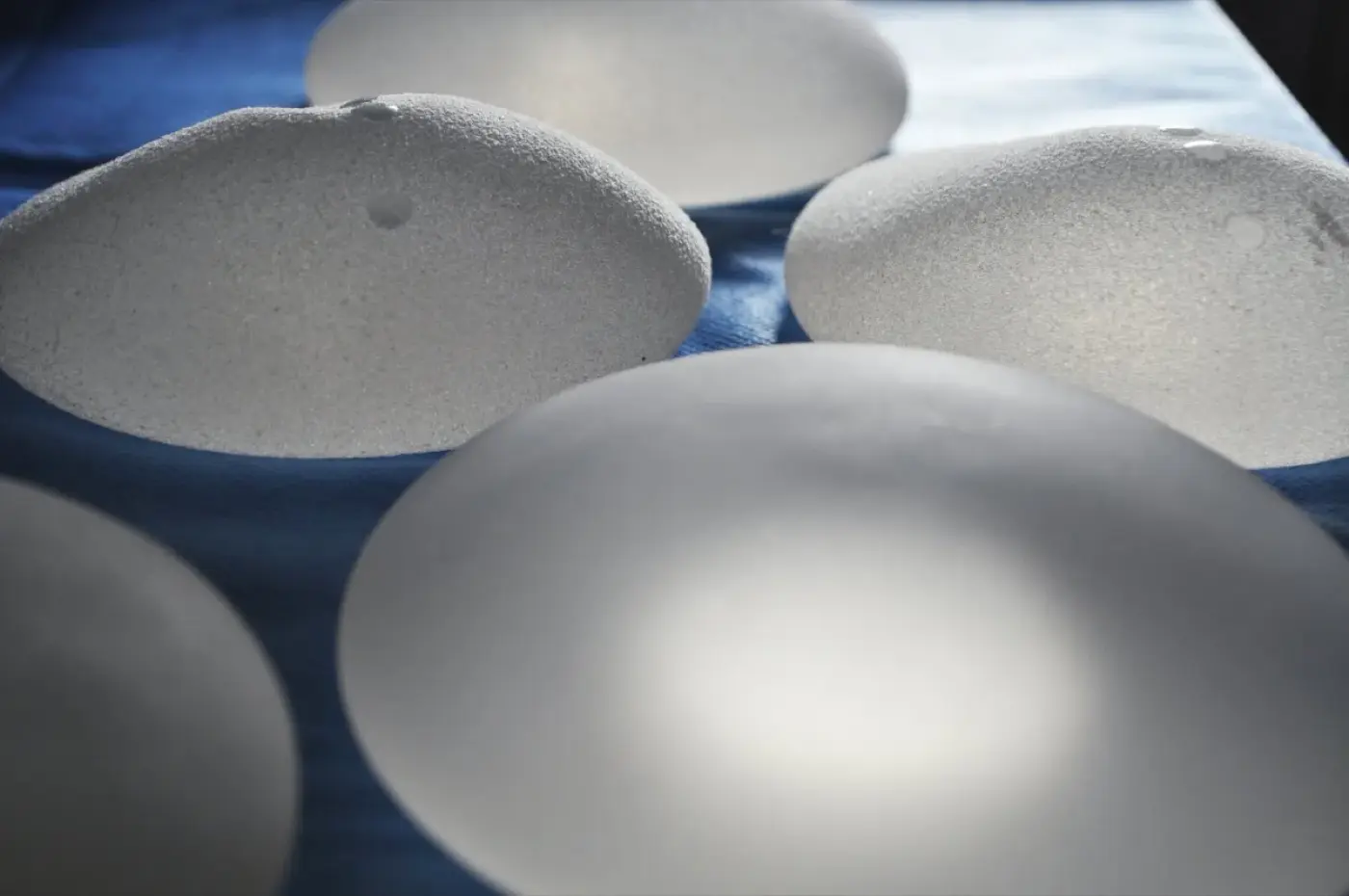
Implant reconstruction is the most common method. It can be done in one stage ("direct-to-implant") or in two stages: first a tissue expander is placed and gradually filled with saline over several weeks, then it is exchanged for a permanent implant. Implants are placed under or over the chest muscle, often supported by a mesh or tissue matrix.
Advantages: shorter operation and recovery, no additional scar elsewhere. Drawbacks: implants may need replacement over the years, and capsular contracture is more common after radiotherapy. Our implant guide explains shapes and sizes.
Reconstruction with your own tissue: DIEP and other flaps
- DIEP flap: skin and fat from the lower abdomen are moved to the chest with their blood vessels, which are reconnected under the microscope. The abdominal muscle is preserved, and the result feels warm and soft and changes with your weight like a natural breast. The tummy is tightened as in a tummy tuck.
- Latissimus dorsi flap: muscle and skin from the back are rotated to the front, often with a small implant. Useful after radiotherapy or when the abdomen cannot be used.
- Other flaps (TUG, PAP, SGAP): tissue from the inner thigh or buttock for women with little abdominal fat.
Flap surgery is longer and recovery takes more time, but the result is usually long-lasting and does not depend on implants.
Fat grafting
With fat transfer, fat is taken by liposuction and injected into the breast. It is mostly used to refine a reconstruction – filling hollows, softening edges or improving skin after radiotherapy – and, in selected cases, to build a small breast over several sessions.
Nipple reconstruction and tattoo
The final step, usually three to six months after the breast mound has settled, is to recreate the nipple and areola. A small local flap creates the nipple projection, and medical tattooing adds the colour of the areola. Some women prefer a 3D nipple tattoo alone, without surgery. Symmetry procedures on the other breast – a lift, reduction or augmentation – can be done in the same session.
Reconstruction after breast-conserving surgery
Reconstruction is not only for mastectomy. After a lumpectomy, especially in a smaller breast or when the tumour was in the lower or inner part of the breast, a dent, a change in nipple position or a smaller, firmer breast can result – particularly once radiotherapy has finished. These "partial" defects can be corrected with:
- oncoplastic reshaping at the time of the lumpectomy, using breast lift and reduction patterns to rearrange the remaining tissue;
- local flaps, such as small perforator flaps from the side of the chest, to fill a defect;
- fat grafting to fill dents and soften radiated tissue;
- symmetry surgery on the other breast, such as a reduction or lift.
Implants are used more cautiously in a breast that has had radiotherapy, because the risk of hardening and complications is higher. Your plastic surgeon will usually wait until the skin has recovered from radiotherapy – often six to twelve months – before planning delayed corrective surgery.
Recovery and what to expect
Recovery depends on the method. After implant reconstruction, most women go home after one or two nights and return to light activity within two to three weeks. After a DIEP flap, the hospital stay is longer because the flap is monitored closely in the first days, and both the chest and the abdomen need to heal. Drains, a supportive bra and, after abdominal flaps, a compression garment are used. Expect several follow-up visits and, often, a second smaller operation for refinements, symmetry or nipple reconstruction.
Choosing the right reconstruction
The best method depends on your cancer treatment (especially radiotherapy), body shape, breast size, general health, smoking status and personal priorities. Breast reconstruction usually requires more than one operation. Ask your surgeon to show you results of each technique and to explain recovery time and possible complications such as wound problems, flap failure, infection or implant problems. If a previous reconstruction did not turn out as hoped, see our page on revision of breast surgery problems.
How New City Clinic can help
At New City Clinic in Istanbul, reconstruction is planned together by the oncology team and plastic surgeon Dr. Fatih Kılıç. Send your reports and photos via WhatsApp for a free online assessment; your coordinator handles hospital, hotel, transfers and follow-up. You can also read our article on second opinions and reconstruction on newcityclinic.com.
Frequently asked questions
Can I have breast reconstruction years after a mastectomy?
Yes. Delayed reconstruction is possible many years later. After radiotherapy, your own tissue (such as a DIEP or latissimus dorsi flap) is often preferred.
Does breast reconstruction hide a recurrence?
Current evidence suggests reconstruction does not delay detection of a recurrence. Follow-up examinations and imaging continue as advised by your oncologist.
How long is recovery after a DIEP flap?
Usually four to seven days in hospital and around six to eight weeks before returning to most normal activities. Implant reconstruction recovers faster.
Will the reconstructed breast have sensation?
Sensation is usually reduced. Some feeling may return over months or years, particularly with flaps; nerve-reconnection techniques are used in some cases.
Can both breasts be reconstructed at the same time?
Yes. After a bilateral mastectomy, both sides are usually reconstructed together, which also makes symmetry easier.
Can the other breast be adjusted to match?
Yes. A lift, reduction or augmentation of the healthy breast is a common part of reconstruction to improve symmetry.
New City Clinic · newcityclinic.com
Why patients choose New City Clinic for breast surgery in Turkey
- Authorised by the Ministry of HealthInternational health tourism authorisation, HealthTürkiye registration and TÜRSAB licence 17659.
- Top private hospitals in IstanbulAcıbadem, Medicana, Medipol, Medical Park and Biruni University Hospital.
- A named, experienced breast surgeonOp. Dr. Fatih Kılıç – plastic, oncology and reconstructive surgeon with 12+ years of experience.
- One fixed, all-inclusive priceSurgery, hospital, hotel, transfers and aftercare in one written quote.
- Complication insurance & ISO-certifiedInsurance in every package; ISO 9001, 27001, 10002 and 31000 processes.
Request your free assessment
Share a few photos and your questions on WhatsApp. They are seen only by the medical team.