Capsular contracture: Baker grades, causes and treatment
Capsular contracture is the most common long-term complication of breast implants. The natural scar capsule around the implant tightens and hardens, which can make the breast firm, misshapen or painful. It is treatable, usually with a capsulectomy and implant exchange.
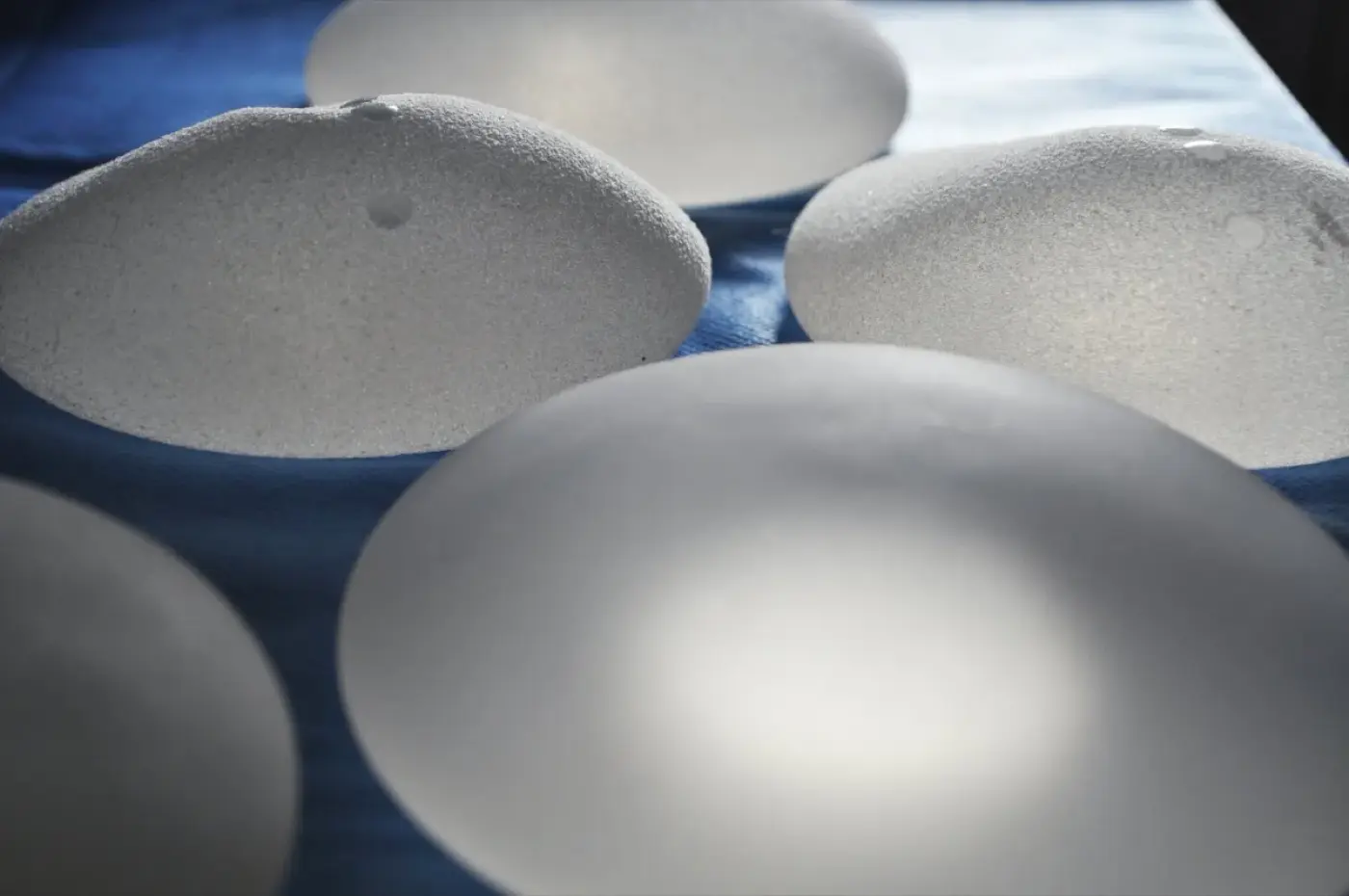
What is capsular contracture?
Whenever an implant is placed in the body, the body forms a thin layer of scar tissue around it – the capsule. Normally, this capsule stays soft and thin and holds the implant in place. In capsular contracture, the capsule thickens and contracts, squeezing the implant. The breast becomes firmer, may look rounder or higher, and in advanced cases can become distorted and painful.
It can develop in one or both breasts, months or many years after surgery. Capsular contracture also occurs after implant-based breast reconstruction, particularly after radiotherapy.
Baker grades
Surgeons grade capsular contracture using the Baker classification:
- Baker grade 1: the breast is soft and looks natural. This is a normal capsule.
- Baker grade 2: the breast is a little firm to the touch but looks normal.
- Baker grade 3: the breast is firm and looks abnormal – rounder, higher, or with visible distortion.
- Baker grade 4: the breast is hard, painful and visibly distorted, often cold to the touch.
Grades 1 and 2 usually need no treatment. Grades 3 and 4 are generally treated surgically, both to relieve symptoms and restore shape.
Causes and risk factors
The exact cause is not fully understood, but several factors are linked to a higher risk:
- Bacterial contamination and biofilm: a low-grade colonisation of the implant surface by bacteria is thought to be a major factor.
- Blood or fluid around the implant after surgery (haematoma or seroma).
- Radiotherapy to the breast.
- Implant placement: implants placed over the muscle are generally associated with a higher risk than those under the muscle.
- Implant rupture, particularly with older implants.
- Previous capsular contracture, which increases the risk of recurrence.
- Smoking and other factors that impair healing.
Symptoms to watch for
- the breast feels progressively firmer or tighter;
- the implant rides higher or looks rounder, like a ball;
- the two breasts start to look different – see breast asymmetry;
- discomfort or pain, especially when lying on your front or exercising;
- visible folds, rippling or distortion.
A sudden change, swelling or fluid collection years after surgery is not typical of capsular contracture and should be checked promptly; see our page on BII and BIA-ALCL. Ultrasound or MRI can assess the capsule and check implant integrity; read more on imaging with implants.
Prevention
Surgeons reduce the risk with meticulous technique: careful control of bleeding, strict antiseptic measures, minimal handling of the implant (sometimes using an insertion funnel), changing gloves before handling the implant, an incision in the breast fold rather than around the areola in many cases, and placement under the muscle when appropriate. After surgery, follow your surgeon’s instructions about bras, massage (if recommended for your implant type) and activity. Stopping smoking, and getting prompt treatment for any infection anywhere in the body, may also help.
Treatment: capsulectomy and implant exchange
Non-surgical options – massage, ultrasound therapy or some medications – have limited evidence and are not a reliable solution for grade 3 or 4 contracture. The standard treatment is surgery:
- Capsulotomy: the capsule is cut to release it. Recurrence is more common, so this is used less often today.
- Total capsulectomy: the entire capsule is removed. This is usually preferred, especially with thick or calcified capsules.
- En bloc capsulectomy: the implant and capsule are removed together in one piece; often used when there is rupture or other concerns.
- Implant exchange: a new implant is placed, often in a new pocket (for example, moving from over to under the muscle), sometimes with a tissue matrix to reduce recurrence.
- Implant removal: some women choose to have the implants removed altogether, with or without a lift or fat transfer.
Our page on breast implant replacement explains the exchange procedure in detail.
Recovery and recurrence
Recovery after capsulectomy and exchange is similar to, or slightly longer than, the first augmentation: usually one night in hospital, sometimes drains, a supportive bra for six weeks, return to desk work after one to two weeks and sport after about six weeks. Capsular contracture can recur, but changing the pocket, using a new implant and careful technique reduce the risk. If the skin is stretched or the breast sags after removing a contracted implant, a lift with implants may be combined.
How New City Clinic can help
Send photos and any ultrasound or MRI reports via WhatsApp for a free online assessment. Our plastic surgeons will grade the contracture and explain the options – exchange, removal or a combination with a lift. More information is available on newcityclinic.com about breast implant revision, implant replacement and removal in Turkey and implant safety and aftercare. Surgery takes place in accredited hospitals in Istanbul.
Frequently asked questions
How common is capsular contracture?
It is the most common long-term complication of breast implants, but most women never develop a significant contracture. The risk is higher after radiotherapy and in revision surgery.
Can capsular contracture go away on its own?
No. A grade 3 or 4 contracture does not usually soften by itself. Grades 1 and 2 often need no treatment.
Is capsular contracture dangerous?
It is not dangerous in itself, but it can be painful and change the shape of the breast. It should be assessed to rule out rupture or other causes.
Can massage prevent capsular contracture?
Massage is recommended by some surgeons for certain smooth implants, but evidence is limited and it is not appropriate for all implant types. Follow your own surgeon’s advice.
Will a new implant harden again?
Recurrence is possible, but removing the whole capsule, changing the pocket and careful technique reduce the risk.
Can I just have my implants removed?
Yes. Removal with capsulectomy is an option; a lift or fat transfer can improve the shape afterwards.
Does capsular contracture affect breast screening?
It can make mammography compression uncomfortable and limit the views. Tell the radiographer; ultrasound or MRI can be added if needed.
Can capsular contracture happen years after augmentation?
Yes. It can appear months or many years after surgery. Any progressive hardening or change in shape should be checked by your surgeon.
Which implants have the lowest risk of capsular contracture?
Risk depends more on placement, technique and healing than on any single brand. Implants under the muscle are generally linked to a lower risk than those over it.
New City Clinic · newcityclinic.com
Why patients choose New City Clinic for breast surgery in Turkey
- Authorised by the Ministry of HealthInternational health tourism authorisation, HealthTürkiye registration and TÜRSAB licence 17659.
- Top private hospitals in IstanbulAcıbadem, Medicana, Medipol, Medical Park and Biruni University Hospital.
- A named, experienced breast surgeonOp. Dr. Fatih Kılıç – plastic, oncology and reconstructive surgeon with 12+ years of experience.
- One fixed, all-inclusive priceSurgery, hospital, hotel, transfers and aftercare in one written quote.
- Complication insurance & ISO-certifiedInsurance in every package; ISO 9001, 27001, 10002 and 31000 processes.
Request your free assessment
Share a few photos and your questions on WhatsApp. They are seen only by the medical team.